Ash Cave: The Ash Piles and the 1877 Dig
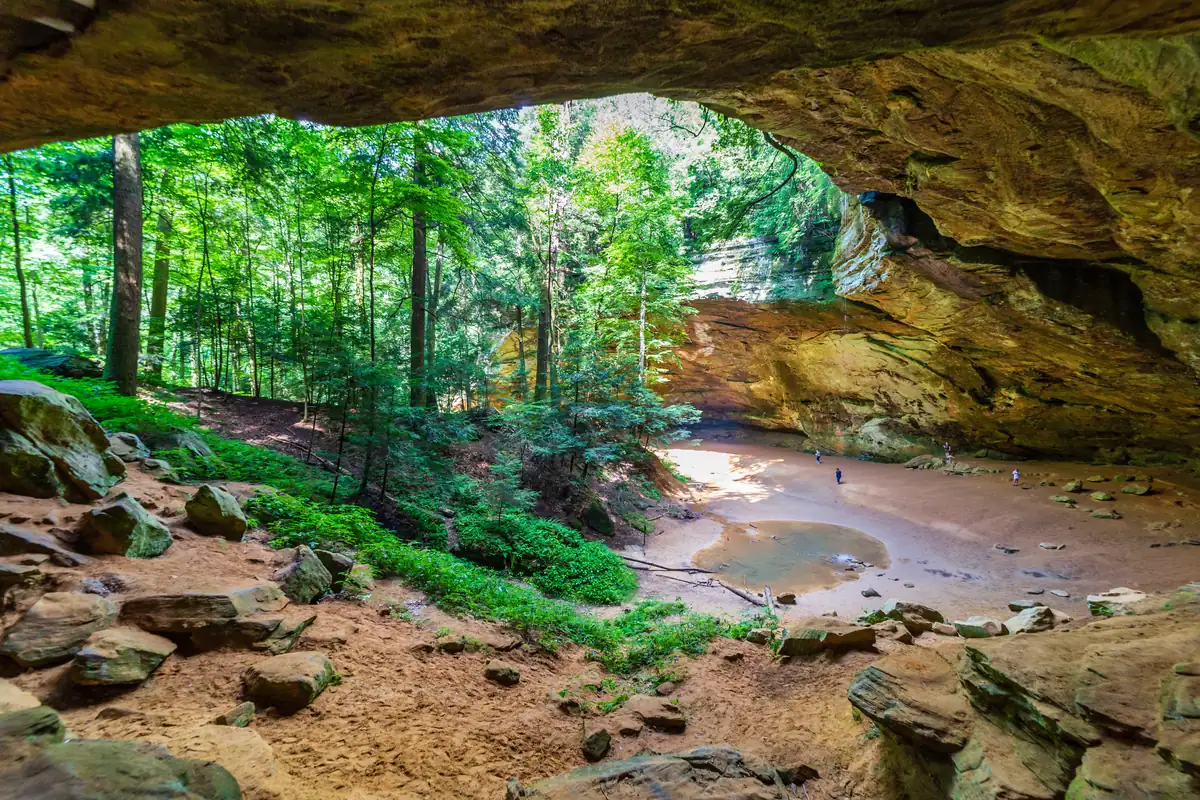
The people in Andrew Parlette's photograph look tiny beneath Ash Cave's overhang. The shelter measures 700 feet from end to end, reaches 100 feet from the rear cave wall to its front edge, and has a rim 90 feet high. Its name comes from the piles of ashes that early settlers found beneath that roof.
The ashes and the 1877 dig
The largest recorded ash pile measured 100 feet long, 30 feet wide and 3 feet deep. That made it as long as the shelter is deep, a substantial deposit even in a space this large.
The ashes are believed to have accumulated from campfires built by Indigenous people over hundreds of years, but that explanation is not proven; their origin remains unknown.
A test excavation in 1877 brought up arrows, pieces of pottery, animal bones and corn cobs.
At the entrance in 1937
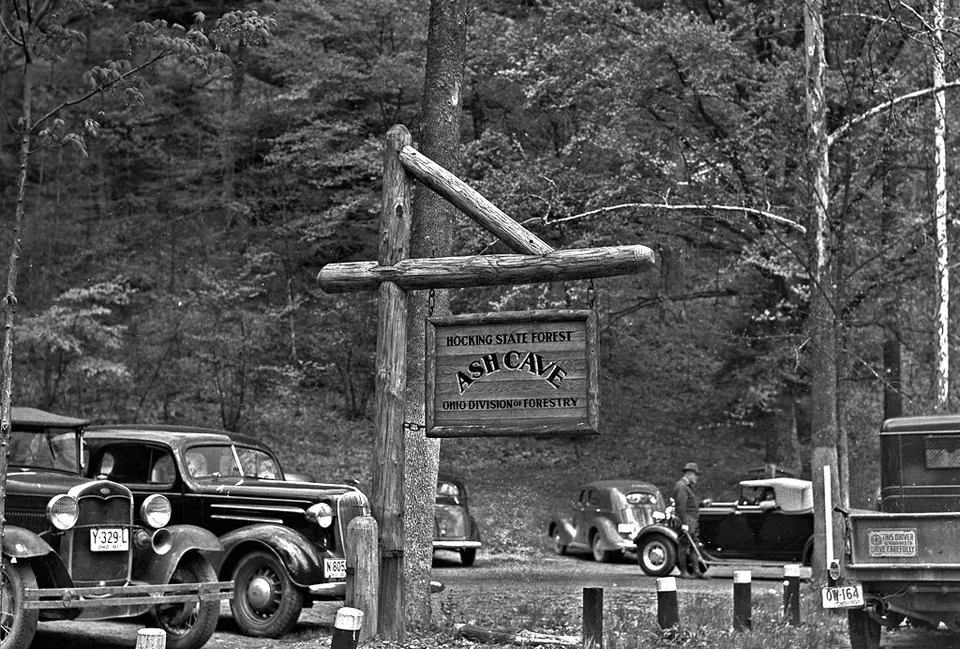
The photograph from the Don O'Brien collection shows the Ash Cave entrance sign in spring 1937, with a 1931 Model A Ford. The wooden sign and parked cars offer a glimpse of a visit from another time, long after the test excavation. Where Parlette's photograph shows visitors beneath the shelter, this older view records the entrance, with the cave's name above the cars.
Visiting Ash Cave
The approach passes through a narrow gorge approximately one-fourth mile long. HockingHills.com states that the restrooms and trail leading to Ash Cave are wheelchair accessible.
At the cave, a small tributary of the East Fork of Queer Creek cascades over the rim into a small plunge pool below.
For a longer walk, the six-mile Grandma Gatewood Memorial Trail runs from Old Man's Cave through Cedar Falls to Ash Cave.

